
Government Of India
A-
A
A+

Latest insights & developments from the world of Artificial Intelligence(AI).

AI for fraud detection
AI Models
fintech
RBI's AI initiative MuleHunter.ai: AI solution to tackle digital fraud in India
The Reserve Bank Innovation Hub (RBIH) has developed MuleHunter.AI, an AI/ML-powered tool to detect mule accounts used in financial fraud. Analysing 19 behavioural patterns across banking data, it outperforms traditional rule-based detection methods. Successfully piloted with two public sector banks, it aims for wider rollout to secure India's digital financial ecosystem.

 0
0  1
1  1 min read


AI Models
Domain Specific AI
LLM
Telecommunications
Exploring Telecom-Specific Large Action Model TSLAM-4b
TSLAM-4B is the first LLM specifically designed for the telecommunications industry, developed by NetoAI. With 4 billion parameters, 128K token context length, and trained on 427 million telecom-specific tokens, it enables network troubleshooting, infrastructure planning, customer support automation, and regulatory compliance, setting a new benchmark for domain-specific AI in telecom.

- 1
- 2
- 1 min read
Big Data
Government Policy
High Performance Computing
Supercomputing
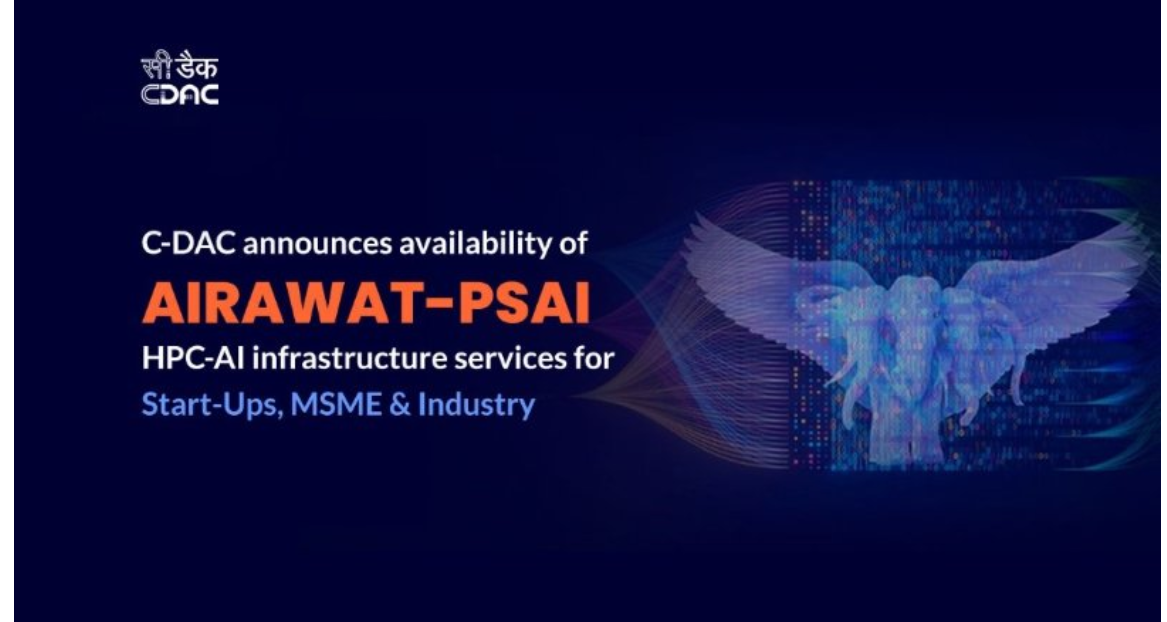
AIRAWAT: A landmark in India’s AI supercomputing journey
India's AI supercomputer AIRAWAT, installed at C-DAC Pune, ranks No. 75 globally in the Top 500 Supercomputing List. With a peak performance of 13,170 teraflops and 200 AI petaflops, it is India's largest and fastest AI supercomputing system. Funded by MeitY, AIRAWAT supports AI research across healthcare, agriculture, NLP, defence, and education, driving India's technological self-reliance.
- 0
- 1
- 1 min read
AI in Agriculture
computer vision
drone technology
Machine Learning
Precision Agriculture
AI in agriculture in 2025: Transforming Indian farms for a sustainable future
India's agricultural sector is being transformed by AI, with the global AI in agriculture market projected to grow at 23.1% CAGR, reaching USD 4.7 billion by 2028. AI tools enable precision farming, crop disease detection, automated weed control, and livestock monitoring. Government initiatives like Kisan e-Mitra Chatbot and AI Centres of Excellence are accelerating adoption across Indian farms.

- 0
- 2
- 1 min read
connection closed
thisdemoaprl10csm
ggggggggggggggggggggggggggggggggggggggggggggggggggggggggggggggggggggggggggggggggggggggggjjjjjjjjjjjjjjjjjjjjjjjjjjjjjjjjjjjjjjjjjjjjjjjjjjjjjjjjjjjjjjjjjjjjjjjjjjjjjjjjjjjjjjjjjjjjjjjjjjjjjjjjjjjjjjjjj
- 1
- 9
- 1 min read
CDSCO
Workflow Optimisation
testnewarticle
This dataset provides a comprehensive record of rural habitations across India as on 1st April 2010 under the National Rural Drinking Water Programme (NRDWP). It captures habitation identifiers (State, District, Block, Panchayat, Village), along with socio-demographic details such as population distribution across Scheduled Castes (SC), Scheduled Tribes (ST), and General categories. Additionally, it indicates the status of potable drinking water availability for each habitation, classified as Co

- 0
- 6
- 1 min read
Showing 6 items
© 2026 - Copyright AIKosh. All rights reserved. This portal is developed by National e-Governance Division for AIKosh mission.